
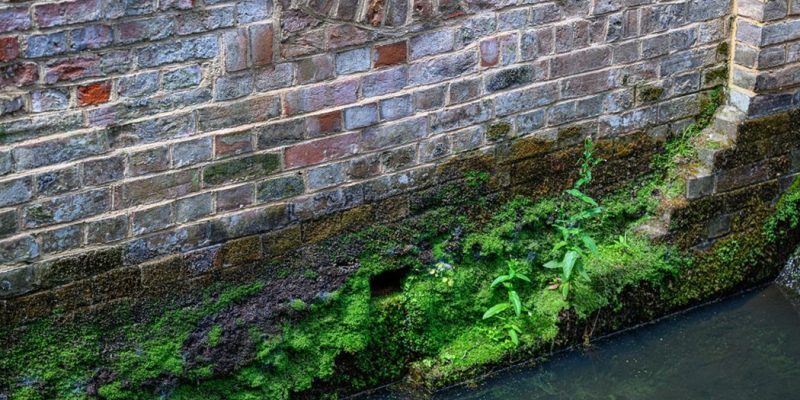

Rainwater penetration of the outer skin of a building is not only unsightly but can cause serious deterioration of the building substrate as well as causing considerable damage to interior surfaces. A wet wall is also something that will affect the thermal properties of a building. Simply put, a dry wall is a warm wall. When walls retain more heat, houses stay warmer for longer. This reduces the reliance on heating, which leads to lowered energy bills and reduced household carbon footprints.
In areas where there is considerable frost, water accumulating in the substrate will turn to ice and cause serious spalling of brickwork and concrete. Wet walls are also serious health hazards as they provide a perfect growing medium for fungus and mould.
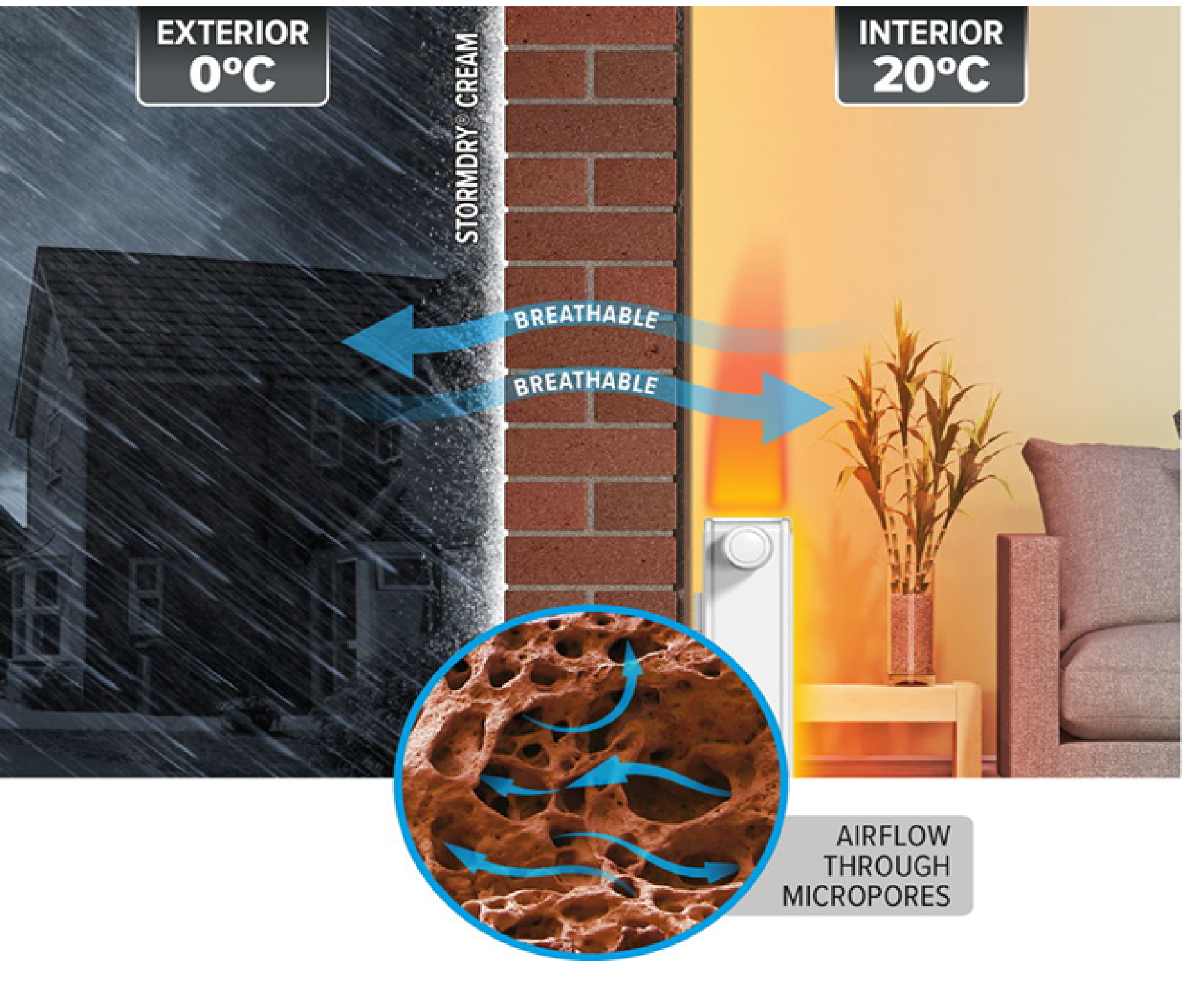
For many years, exterior stone and brickwork surfaces have been treated with a variety of products to prevent water ingress. Some have sealed the exterior by blocking the pores – varnishes etc. But this can be counter-productive as it does not allow the building to “breathe” – releasing humidity build-up within the building.
Various liquid-based products containing silanes and siloxanes have been used successfully for several decades. These have been either solvent or water-based products which have prevented moisture ingress whilst still allowing the escape of water vapour from the interior of the building. These products, however, simply lined the exterior building surface and were affected by UV attack requiring them to be re-applied every 2-3 years.
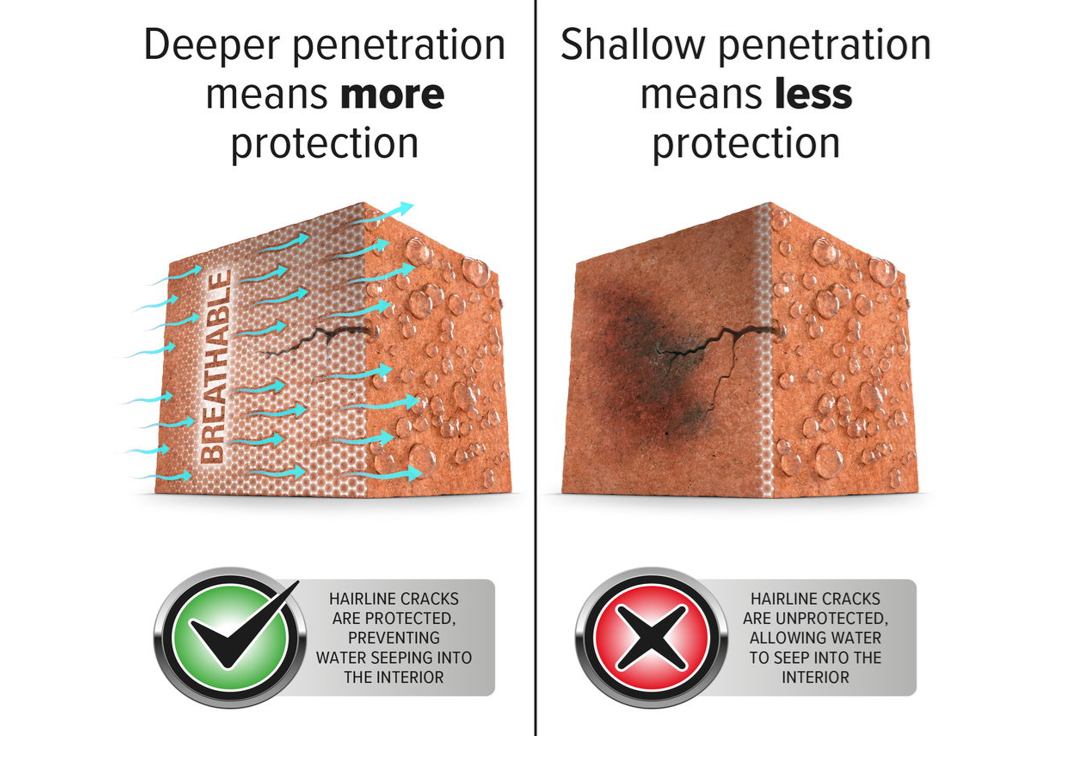
Using the same technology as its famous Dryzone Cream, Safeguard Europe developed a cream-based water repellent also containing the same silanes and siloxanes. This cream, applied by brush in one coat, penetrates the surface of the substrate to a depth of 2-3cm making it totally unaffected by UV with its effectiveness being warranted for 25 years. Whilst the cream is white in colour, it is soon absorbed by the substrate and once cured has no visible effect on the original appearance of the substrate. Storm Dry, as it is called, is highly effective in protecting coastal properties not just against water ingress but also the effects of airborne salts.
The cream based consistency of Stormdry eases the application of the product. Treated and untreated areas can easily be identified, while splashing and spillages are avoided due to the thick consistency.
Stormdry Masonry Protection Cream has been scientifically proven to improve the thermal performance of solid and cavity walls by keeping water out. It is the most extensively tested waterproofing brick cream on the market. Extensive tests by Lucideon, a highly recognized materials science consultancy, as well as multiple reports commissioned by the UK Ministry of Housing, Communities and Local Government have found that Stormdry protects insulation and reduces heat loss.
Waterproofing of roofs, basements, etc. shall be laid under appropriate manufacturer guarantees supplemented
by a contractor workmanship guarantee. Waterproofing to flat roofs shall be laid with a minimum fall to outlets of
1:80 and include all outlets, etc.Waterproof of external basment walls shall take into account the definition of dry and wet sides as per SANS 10021: 2006 6.15.2 and 6.1.5.3 and provide one or two layer membrane systems as
appropriate descriptions of sheets or membrane waterproofing shall be deemed to include all labour costs.

Apply Safeguard SG720″ primer to prepared surfaces, followed by two coats of “Safeguard SG280” waterproofing polyurethane and one coat of SG PU440 with SG PU Fabric on horizontal and vertical joints.
Apply Safeguard SG720″ primer to prepared surfaces, followed by two coats of “Safeguard SG280” waterproofing polyurethane and one coat of SG PU450 with SG PU Fabric on horizontal and vertical joints.
Thoroughly clean and prepare the surface, as per Safeguard Method Statement for Surface Preparation.
Apply one coat of Safeguard solvent-based Bitumen Primer to the surface ensuring full coverage without any “ponding” of primer on the surface.
Allow to dry and heat-fuse one layer of Safeguard Euro Gecko 4mm APP single re-inforced Bitumen Membrane to the primed surface, lapping all side walls and dressing into and around outlets and upstands.
Provide 100mm side laps and 150mm end laps to adjoining rolls of membrane, ensuring that laps are properly “bled”.
Suitable performance-related products are acceptable.
5-7 days after application of the Bitumen Membrane, thoroughly clean the surface of the membrane and apply 2 coats of Safeguard Bitumen Aluminium paint to the membrane using a brush, roller or spray.
Equivalent products are acceptable.
Thoroughly clean and prepare the surface, removing all laitance, dust, dirt, grime and grease.
Apply one coat of solvent-based Bitumen Primer to the surface ensuring full coverage without any “ponding” of primer on the surface.
Allow to dry and heat-fuse one layer of 4mm APP single re-inforced Bitumen Membrane to the primed surface, lapping all side walls and dressing into and around outlets and upstands.
Provide 100mm side laps and 150mm end laps to adjoining rolls of membrane, ensuring that laps are properly “bled”.
5-7 days after application of the Bitumen Membrane, thoroughly clean the surface of the membrane and apply 2 coats of Bitumen Aluminium paint to the membrane using a brush, roller or spray

Thoroughly clean and prepare all external walls from foundation to 2 brick courses above finished ground level as per Safeguard Method Statement for Surface Preparation.
Apply one coat of Safeguard SG 720 Primer to the walls by spray, roller or brush and allow to dry.
Apply two coats of Safeguard SG PU 610 by spray, roller or brush. If applying by spray, dilute with 5% MEK. Allow the first coat to dry overnight. A third coat should be applied where “Wet” sites are encountered as per SANS 10021:2006 6.1.5.3
Protect membrane with soft board or dimpled membrane prior to backfill.
Equivalent performance-related products may be supplied.
Thoroughly clean and prepare all external walls from foundation to 2 brick courses above finished ground level, removing all dirt, dust, grime grease and any unnecessary mortar,
Apply one coat of Polyurethane Primer to the walls and allow to dry.
Apply two coats of Polyurethane waterproofing membrane to a DFT of 1-2mm. The membrane should accommodate temperatures from -30? to +90?C and have a minimum elasticity of 600% with a Shore A hardness of 60 or greater and a Tensile strength of 4N/mm? or greater. Allow the first coat to dry overnight. A third coat should be applied where “Wet” sites are encountered as per SANS 10021:2006 6.1.5.3
Protect membrane with soft board or dimpled membrane prior to backfill.

Thoroughly clean shower walls and floor, removing all loose dirt, mortar, grime and grease. Walls should not be plastered.
Apply a coat of Safeguard Latseal Slurry mixed with Bondaid to the walls and floor, embedding a non-woven polypropylene membrane into the slurry at all joints.
Allow to cure overnight and apply a further coat of Safeguard slurry to the entire area.
At the joint with the outlet, an expandable polyurethane sealant should be applied to cover both surfaces. This should be allowed to cure, together with the slurry before application of any tiles/mosaics.

Equivalent products are acceptable.
Thoroughly clean shower walls and floor, removing all loose dirt, mortar, grime and grease. Walls should not be plastered.
Apply a coat of cementitious waterproof slurry mixed with bonding liquid to the walls and floor, embedding a non-woven polypropylene membrane into the slurry at all joints.
Allow to cure overnight and apply a further coat of slurry to the entire area.
At the joint with the outlet, an expandable polyurethane sealant should be applied to cover both surfaces. This should be allowed to cure, together with the slurry before application of any tiles/mosaics.
PRODUCT GUARANTEE
Polyurethane Roofing – SG PU280
Polyurethane Foundation – SG PU610
Joint Sealant – SG Flex20
Bitumen Roofing – 4mm Torch-on membrane
Polyurethane Undertile Showers / Balconies – SG PU610
Cementitious Undertile Showers/Balconies – Latseal Slurry

SG PU 280 Flat Roof
SG PU 610 Garden Roof
SG 4mm Bitumen Roof
SG PU 610 Foundation
SG PU 280 Car parking
Waterproofing of roofs, basements, etc. shall be laid under appropriate manufacturer guarantees supplemented
by a contractor workmanship guarantee. Waterproofing to flat roofs shall be laid with a minimum fall to outlets of
1:80 and include all outlets, etc.Waterproof of external basment walls shall take into account the definition of dry and wet sides as per SANS 10021: 2006 6.15.2 and 6.1.5.3 and provide one or two layer membrane systems as
appropriate descriptions of sheets or membrane waterproofing shall be deemed to include all labour costs.
Apply Safeguard SG720″ primer to prepared surfaces, followed by two coats of “Safeguard SG280” waterproofing
polyurethane and one coat of SG PU440 with SG PU Fabric on horizontal and vertical joints.
Apply Safeguard SG720″ primer to prepared surfaces, followed by two coats of “Safeguard SG280” waterproofing
polyurethane and one coat of SG PU450 with SG PU Fabric on horizontal and vertical joints.
Thoroughly clean and prepare all external walls from foundation to 2 brick courses above finished ground level as per Safeguard Method Statement for Surface Preparation.
Apply one coat of Safeguard SG 720 Primer to the walls by spray, roller or brush and allow to dry.
Apply two coats of Safeguard SG PU 610 by spray, roller or brush. If applying by spray, dilute with 5% MEK. Allow the first coat to dry overnight. A third coat should be applied where “Wet” sites are encountered as per SANS 10021:2006 6.1.5.3
Protect membrane with soft board or dimpled membrane prior to backfill.
Equivalent performance-related products may be supplied.
Thoroughly clean and prepare all external walls from foundation to 2 brick courses above finished ground level, removing all dirt, dust, grime grease and any unnecessary mortar,
Apply one coat of Polyurethane Primer to the walls and allow to dry.
Apply two coats of Polyurethane waterproofing membrane to a DFT of 1-2mm. The membrane should accommodate temperatures from -30? to +90?C and have a minimum elasticity of 600% with a Shore A hardness of 60 or greater and a Tensile strength of 4N/mm? or greater. Allow the first coat to dry overnight. A third coat should be applied where “Wet” sites are encountered as per SANS 10021:2006 6.1.5.3
Protect membrane with soft board or dimpled membrane prior to backfill.
Thoroughly clean and prepare the surface, as per Safeguard Method Statement for Surface Preparation.
Apply one coat of Safeguard solvent-based Bitumen Primer to the surface ensuring full coverage without any “ponding” of primer on the surface.
Allow to dry and heat-fuse one layer of Safeguard Euro Gecko 4mm APP single re-inforced Bitumen Membrane to the primed surface, lapping all side walls and dressing into and around outlets and upstands.
Provide 100mm side laps and 150mm end laps to adjoining rolls of membrane, ensuring that laps are properly “bled”.
Suitable performance-related products are acceptable.
5-7 days after application of the Bitumen Membrane, thoroughly clean the surface of the membrane and apply 2 coats of Safeguard Bitumen Aluminium paint to the membrane using a brush, roller or spray.
Equivalent products are acceptable.
Thoroughly clean and prepare the surface, removing all laitance, dust, dirt, grime and grease.
Apply one coat of solvent-based Bitumen Primer to the surface ensuring full coverage without any “ponding” of primer on the surface.
Allow to dry and heat-fuse one layer of 4mm APP single re-inforced Bitumen Membrane to the primed surface, lapping all side walls and dressing into and around outlets and upstands.
Provide 100mm side laps and 150mm end laps to adjoining rolls of membrane, ensuring that laps are properly “bled”.
5-7 days after application of the Bitumen Membrane, thoroughly clean the surface of the membrane and apply 2 coats of Bitumen Aluminium paint to the membrane using a brush, roller or spray.
Thoroughly clean shower walls and floor, removing all loose dirt, mortar, grime and grease. Walls should not be plastered.
Apply a coat of Safeguard Latseal Slurry mixed with Bondaid to the walls and floor, embedding a non-woven polypropylene membrane into the slurry at all joints.
Allow to cure overnight and apply a further coat of Safeguard slurry to the entire area.
At the joint with the outlet, an expandable polyurethane sealant should be applied to cover both surfaces. This should be allowed to cure, together with the slurry before application of any tiles/mosaics.
Equivalent products are acceptable.
Thoroughly clean shower walls and floor, removing all loose dirt, mortar, grime and grease. Walls should not be plastered.
Apply a coat of cementitious waterproof slurry mixed with bonding liquid to the walls and floor, embedding a non-woven polypropylene membrane into the slurry at all joints.
Allow to cure overnight and apply a further coat of slurry to the entire area.
At the joint with the outlet, an expandable polyurethane sealant should be applied to cover both surfaces. This should be allowed to cure, together with the slurry before application of any tiles/mosaics.

Contact Us 011 7083603
Email techncal@safeguardchem.co.za