
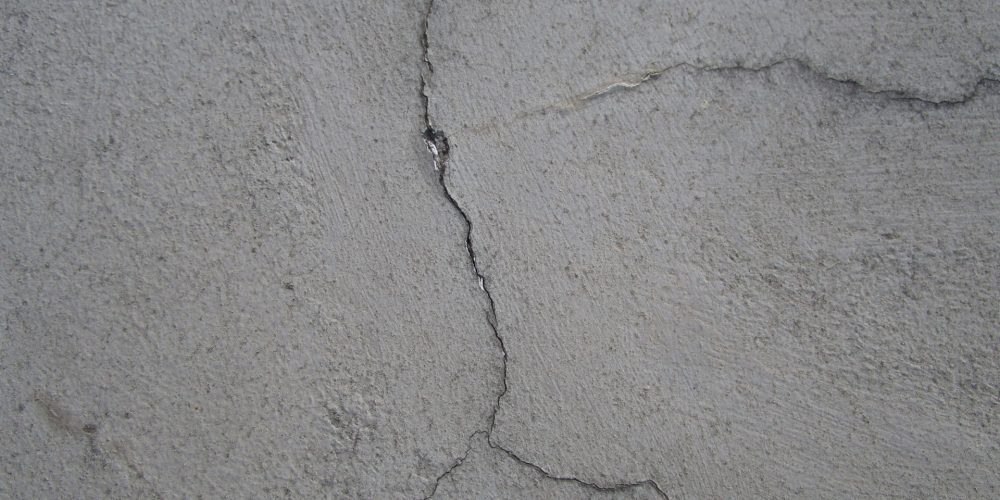
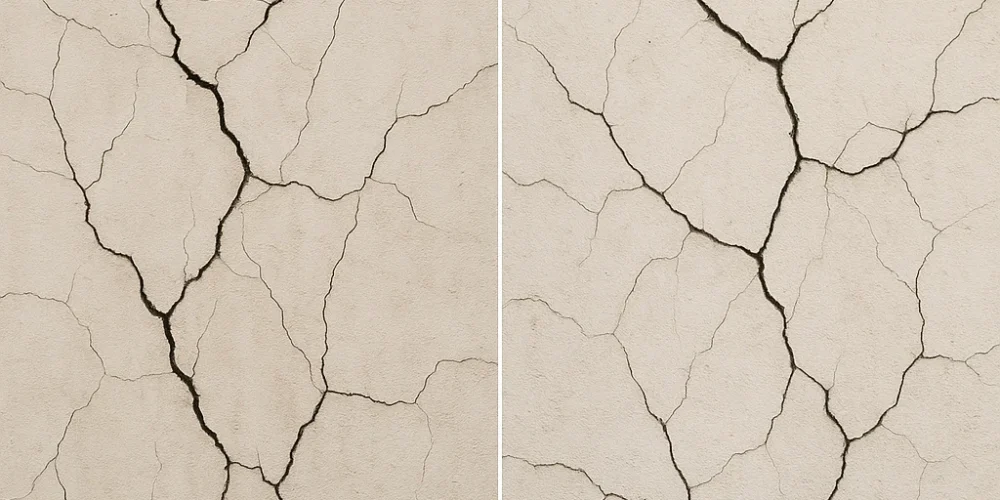

How can a property owner be sure that the plaster provided by the smaller or relatively inexperienced building contractor is acceptable, and if not, what can be done about it? It’s not a simple question to answer, says John Roxburgh, lecturer at The Concrete Institute’s School of Concrete Technology.
“Neither SABS specifications nor the National Building Regulations have measurable requirements covering hardened plaster quality. Most contract documents also are not clear on the subject. This means that it may be difficult to force the contractor to make repairs if the plaster is clearly not acceptable,” Roxburgh states.
Here he deals with perhaps the most obvious defect in plastering: cracks – those that are non-structural and the more challenging and nasty type: structural cracks.
“Non-structural cracking is a network of fine cracks, usually in a hexagonal pattern, which typically measures between 5 and 75mm across each hexagon. Craze cracks are usually very fine and shallow and do not extend through the whole depth of the plaster. They are usually the result of over-trowelling a rich mix – one with a high cement content – or using sand containing an excessive amount of dust: more than 15% by mass passing a 0,075 mm sieve. Crazing often occurs within a few hours of the plaster being applied to the wall and cracks may hardly be visible until dust or moisture makes them noticeable. However, the good news is that craze cracks are of relatively little importance, they do not open and close with time, and can be covered using a reasonable quality paint. If necessary, glass fibre tissue can be applied during the painting operation,” Roxburgh explains.
“Map cracking is similar to crazing except that it is usually deeper – sometimes going right through the plaster – and the hexagons of the pattern may measure up to 200mm across. These cracks normally occur when a plaster mix with a high cement content is used or the plaster is allowed to dry too quickly.”
Causes of such excessive early moisture loss may include:
Adds Roxburgh: “When the cracks are noticed while the plaster is still plastic, they are often floated closed, only to reappear some time later. These cracks can be filled with a proprietary filler and be painted over. Glass fibre tissue can also be applied during painting. Cracking which results when an excessive amount of water is lost from the plaster in the first hours after application is known as plastic shrinkage cracking. Map cracking can be due to plastic shrinkage as can the horizontal cracks which form at corners and between windows.
“Drying shrinkage cracks are the result of moisture loss after the plaster has hardened. Plaster will always shrink and crack so it is desirable that is should develop a large number of fine, unnoticeable cracks at close spacing. Plasters with very high cement contents and those made with poor quality sand having a high water requirement will tend to develop a few, widely-spaced cracks. Plaster applied in layers that are too thick will also tend to crack in this way. These cracks are normally stable and can be filled with a proprietary filler and be painted over.
“Finally, you could encounter cracks that are clearly structural. These may have resulted from cracking of the wall caused by differential movement of the foundations, moisture expansion or drying shrinkage of masonry units, or thermal movement of the roof. This type of crack often forms in straight vertical or horizontal lines, or in stepped diagonal lines, and may be quite unsightly. The crack width will often vary with the seasons. Because these cracks originate in the wall and not in the plaster, repairing the plaster is ineffective. A specialist should be called in to establish the cause of the cracking and to recommend remedial measures that may include structural alterations which change cracks into movement joints. Visible joints can be hidden by cover strips fixed on one side of the joint or sealed with elastomeric sealants,” Roxburgh concludes.
Courtesy – The Concrete Institute
Waterproofing of roofs, basements, etc. shall be laid under appropriate manufacturer guarantees supplemented
by a contractor workmanship guarantee. Waterproofing to flat roofs shall be laid with a minimum fall to outlets of
1:80 and include all outlets, etc.Waterproof of external basment walls shall take into account the definition of dry and wet sides as per SANS 10021: 2006 6.15.2 and 6.1.5.3 and provide one or two layer membrane systems as
appropriate descriptions of sheets or membrane waterproofing shall be deemed to include all labour costs.

Apply Safeguard SG720″ primer to prepared surfaces, followed by two coats of “Safeguard SG280” waterproofing polyurethane and one coat of SG PU440 with SG PU Fabric on horizontal and vertical joints.
Apply Safeguard SG720″ primer to prepared surfaces, followed by two coats of “Safeguard SG280” waterproofing polyurethane and one coat of SG PU450 with SG PU Fabric on horizontal and vertical joints.
Thoroughly clean and prepare the surface, as per Safeguard Method Statement for Surface Preparation.
Apply one coat of Safeguard solvent-based Bitumen Primer to the surface ensuring full coverage without any “ponding” of primer on the surface.
Allow to dry and heat-fuse one layer of Safeguard Euro Gecko 4mm APP single re-inforced Bitumen Membrane to the primed surface, lapping all side walls and dressing into and around outlets and upstands.
Provide 100mm side laps and 150mm end laps to adjoining rolls of membrane, ensuring that laps are properly “bled”.
Suitable performance-related products are acceptable.
5-7 days after application of the Bitumen Membrane, thoroughly clean the surface of the membrane and apply 2 coats of Safeguard Bitumen Aluminium paint to the membrane using a brush, roller or spray.
Equivalent products are acceptable.
Thoroughly clean and prepare the surface, removing all laitance, dust, dirt, grime and grease.
Apply one coat of solvent-based Bitumen Primer to the surface ensuring full coverage without any “ponding” of primer on the surface.
Allow to dry and heat-fuse one layer of 4mm APP single re-inforced Bitumen Membrane to the primed surface, lapping all side walls and dressing into and around outlets and upstands.
Provide 100mm side laps and 150mm end laps to adjoining rolls of membrane, ensuring that laps are properly “bled”.
5-7 days after application of the Bitumen Membrane, thoroughly clean the surface of the membrane and apply 2 coats of Bitumen Aluminium paint to the membrane using a brush, roller or spray

Thoroughly clean and prepare all external walls from foundation to 2 brick courses above finished ground level as per Safeguard Method Statement for Surface Preparation.
Apply one coat of Safeguard SG 720 Primer to the walls by spray, roller or brush and allow to dry.
Apply two coats of Safeguard SG PU 610 by spray, roller or brush. If applying by spray, dilute with 5% MEK. Allow the first coat to dry overnight. A third coat should be applied where “Wet” sites are encountered as per SANS 10021:2006 6.1.5.3
Protect membrane with soft board or dimpled membrane prior to backfill.
Equivalent performance-related products may be supplied.
Thoroughly clean and prepare all external walls from foundation to 2 brick courses above finished ground level, removing all dirt, dust, grime grease and any unnecessary mortar,
Apply one coat of Polyurethane Primer to the walls and allow to dry.
Apply two coats of Polyurethane waterproofing membrane to a DFT of 1-2mm. The membrane should accommodate temperatures from -30? to +90?C and have a minimum elasticity of 600% with a Shore A hardness of 60 or greater and a Tensile strength of 4N/mm? or greater. Allow the first coat to dry overnight. A third coat should be applied where “Wet” sites are encountered as per SANS 10021:2006 6.1.5.3
Protect membrane with soft board or dimpled membrane prior to backfill.

Thoroughly clean shower walls and floor, removing all loose dirt, mortar, grime and grease. Walls should not be plastered.
Apply a coat of Safeguard Latseal Slurry mixed with Bondaid to the walls and floor, embedding a non-woven polypropylene membrane into the slurry at all joints.
Allow to cure overnight and apply a further coat of Safeguard slurry to the entire area.
At the joint with the outlet, an expandable polyurethane sealant should be applied to cover both surfaces. This should be allowed to cure, together with the slurry before application of any tiles/mosaics.

Equivalent products are acceptable.
Thoroughly clean shower walls and floor, removing all loose dirt, mortar, grime and grease. Walls should not be plastered.
Apply a coat of cementitious waterproof slurry mixed with bonding liquid to the walls and floor, embedding a non-woven polypropylene membrane into the slurry at all joints.
Allow to cure overnight and apply a further coat of slurry to the entire area.
At the joint with the outlet, an expandable polyurethane sealant should be applied to cover both surfaces. This should be allowed to cure, together with the slurry before application of any tiles/mosaics.
PRODUCT GUARANTEE
Polyurethane Roofing – SG PU280
Polyurethane Foundation – SG PU610
Joint Sealant – SG Flex20
Bitumen Roofing – 4mm Torch-on membrane
Polyurethane Undertile Showers / Balconies – SG PU610
Cementitious Undertile Showers/Balconies – Latseal Slurry

SG PU 280 Flat Roof
SG PU 610 Garden Roof
SG 4mm Bitumen Roof
SG PU 610 Foundation
SG PU 280 Car parking
Waterproofing of roofs, basements, etc. shall be laid under appropriate manufacturer guarantees supplemented
by a contractor workmanship guarantee. Waterproofing to flat roofs shall be laid with a minimum fall to outlets of
1:80 and include all outlets, etc.Waterproof of external basment walls shall take into account the definition of dry and wet sides as per SANS 10021: 2006 6.15.2 and 6.1.5.3 and provide one or two layer membrane systems as
appropriate descriptions of sheets or membrane waterproofing shall be deemed to include all labour costs.
Apply Safeguard SG720″ primer to prepared surfaces, followed by two coats of “Safeguard SG280” waterproofing
polyurethane and one coat of SG PU440 with SG PU Fabric on horizontal and vertical joints.
Apply Safeguard SG720″ primer to prepared surfaces, followed by two coats of “Safeguard SG280” waterproofing
polyurethane and one coat of SG PU450 with SG PU Fabric on horizontal and vertical joints.
Thoroughly clean and prepare all external walls from foundation to 2 brick courses above finished ground level as per Safeguard Method Statement for Surface Preparation.
Apply one coat of Safeguard SG 720 Primer to the walls by spray, roller or brush and allow to dry.
Apply two coats of Safeguard SG PU 610 by spray, roller or brush. If applying by spray, dilute with 5% MEK. Allow the first coat to dry overnight. A third coat should be applied where “Wet” sites are encountered as per SANS 10021:2006 6.1.5.3
Protect membrane with soft board or dimpled membrane prior to backfill.
Equivalent performance-related products may be supplied.
Thoroughly clean and prepare all external walls from foundation to 2 brick courses above finished ground level, removing all dirt, dust, grime grease and any unnecessary mortar,
Apply one coat of Polyurethane Primer to the walls and allow to dry.
Apply two coats of Polyurethane waterproofing membrane to a DFT of 1-2mm. The membrane should accommodate temperatures from -30? to +90?C and have a minimum elasticity of 600% with a Shore A hardness of 60 or greater and a Tensile strength of 4N/mm? or greater. Allow the first coat to dry overnight. A third coat should be applied where “Wet” sites are encountered as per SANS 10021:2006 6.1.5.3
Protect membrane with soft board or dimpled membrane prior to backfill.
Thoroughly clean and prepare the surface, as per Safeguard Method Statement for Surface Preparation.
Apply one coat of Safeguard solvent-based Bitumen Primer to the surface ensuring full coverage without any “ponding” of primer on the surface.
Allow to dry and heat-fuse one layer of Safeguard Euro Gecko 4mm APP single re-inforced Bitumen Membrane to the primed surface, lapping all side walls and dressing into and around outlets and upstands.
Provide 100mm side laps and 150mm end laps to adjoining rolls of membrane, ensuring that laps are properly “bled”.
Suitable performance-related products are acceptable.
5-7 days after application of the Bitumen Membrane, thoroughly clean the surface of the membrane and apply 2 coats of Safeguard Bitumen Aluminium paint to the membrane using a brush, roller or spray.
Equivalent products are acceptable.
Thoroughly clean and prepare the surface, removing all laitance, dust, dirt, grime and grease.
Apply one coat of solvent-based Bitumen Primer to the surface ensuring full coverage without any “ponding” of primer on the surface.
Allow to dry and heat-fuse one layer of 4mm APP single re-inforced Bitumen Membrane to the primed surface, lapping all side walls and dressing into and around outlets and upstands.
Provide 100mm side laps and 150mm end laps to adjoining rolls of membrane, ensuring that laps are properly “bled”.
5-7 days after application of the Bitumen Membrane, thoroughly clean the surface of the membrane and apply 2 coats of Bitumen Aluminium paint to the membrane using a brush, roller or spray.
Thoroughly clean shower walls and floor, removing all loose dirt, mortar, grime and grease. Walls should not be plastered.
Apply a coat of Safeguard Latseal Slurry mixed with Bondaid to the walls and floor, embedding a non-woven polypropylene membrane into the slurry at all joints.
Allow to cure overnight and apply a further coat of Safeguard slurry to the entire area.
At the joint with the outlet, an expandable polyurethane sealant should be applied to cover both surfaces. This should be allowed to cure, together with the slurry before application of any tiles/mosaics.
Equivalent products are acceptable.
Thoroughly clean shower walls and floor, removing all loose dirt, mortar, grime and grease. Walls should not be plastered.
Apply a coat of cementitious waterproof slurry mixed with bonding liquid to the walls and floor, embedding a non-woven polypropylene membrane into the slurry at all joints.
Allow to cure overnight and apply a further coat of slurry to the entire area.
At the joint with the outlet, an expandable polyurethane sealant should be applied to cover both surfaces. This should be allowed to cure, together with the slurry before application of any tiles/mosaics.

Contact Us 011 7083603
Email techncal@safeguardchem.co.za